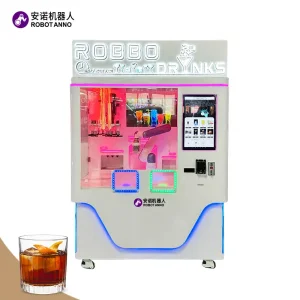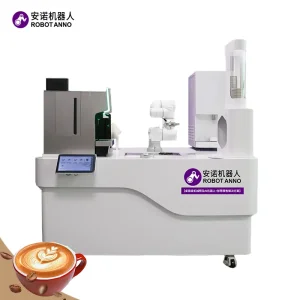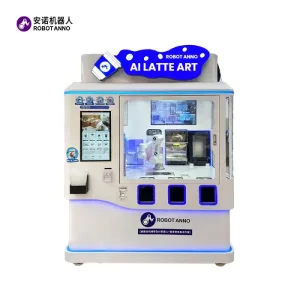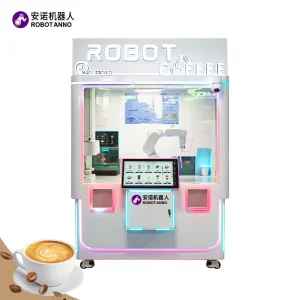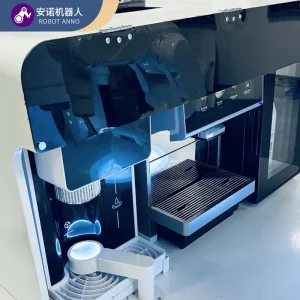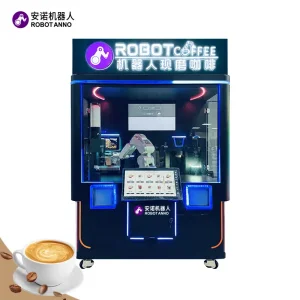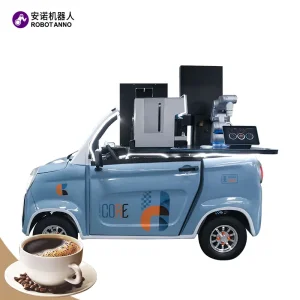
Direct from Factory: Turnkey 24/7 Commercial Unmanned Systems for Global Operators
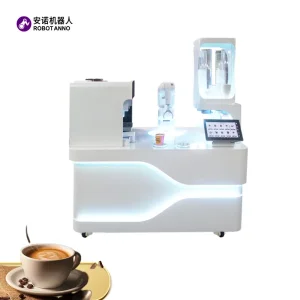
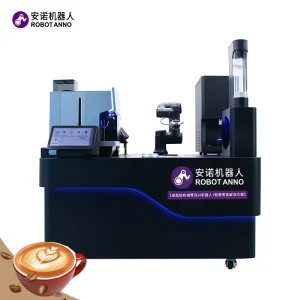
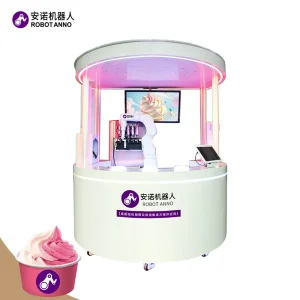
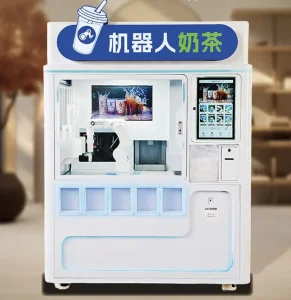
The global food and beverage (F&B) industry is experiencing a seismic paradigm shift. Rapid urbanization, compounding labor shortages, escalating commercial real estate rents, and evolving consumer demand for instant, premium-quality specialty coffee have accelerated the adoption of fully Automated Coffee Shops and robotic beverage kiosks. Far beyond traditional mechanical vending machines, modern OEM automated coffee bars combine high-precision robotic manipulation, artificial intelligence (AI) computer vision, Internet of Things (IoT) cloud telemetry, and commercial-grade espresso extraction systems into compact, highly profitable micro-retail formats.
According to international retail automation benchmarks, the global smart unmanned vending and robotic coffee kiosk market is projected to expand at a Compound Annual Growth Rate (CAGR) exceeding 17.8% over the next decade. Commercial operators, hospital systems, transit authorities, and university campuses are shifting from human-dependent cafe models—which suffer from high turnover rates, inconsistent brew quality, and restricted operating hours—to autonomous robotic coffee modules capable of delivering 24/7 master-level espresso craftsmanship without manual intervention.
A conventional 500 sq.ft specialty coffee shop in a tier-1 metropolis incurs monthly labor expenses for 4–6 baristas, high energy overheads, and a footprint rental fee averaging $6,000–$12,000/month. Conversely, an OEM Automated Coffee Bar requires only 2.5 m² (27 sq.ft), cuts operational expenditure (OPEX) by up to 65%, and achieves capital expenditure (CAPEX) payback within 6 to 10 months based on an average throughput of 120–250 cups per day.
Building a reliable commercial OEM automated coffee machine demands deep mechanical, electrical, and software engineering convergence. Unlike residential coffee makers or consumer-grade gadgets, commercial robotic coffee kiosks are industrial-grade cyber-physical systems engineered for heavy duty cycles (over 500 cups daily continuous output) and rigorous sanitation compliance.
Utilizing high-torque servo motors and harmonic reducers, providing ±0.05mm positional repeatability to mimic human barista wrist rotation, milk steaming angles, and complex 3D latte art execution.
Equipped with commercial Italian-made rotary pumps, PID temperature controllers (±0.5°C stability), and micro-stepless grinders for precise extraction yield (18%–22% golden cup standard).
Integrated high-resolution RGB-D optical cameras and machine learning vision models recognize cup positioning, gauge milk foam viscosity in real time, and render bespoke latte art designs.
When specifying an OEM automated coffee shop manufacturing partnership, enterprise purchasers must evaluate system architecture across five critical modules:
Selecting the right OEM (Original Equipment Manufacturer) factory is the single most decisive factor for brand operators, vending fleet managers, and hardware distributors. China—specifically industrial technology hubs such as Shenzhen, Dongguan, and Suzhou—has emerged as the world's premier manufacturing base for intelligent robotic retail hardware.
| Evaluation Parameter | China Specialized OEM Suppliers | Western Regional Equipment Builders |
|---|---|---|
| Manufacturing Lead Time | 15–30 Days (Rapid Prototyping to Assembly) | 90–180 Days |
| Supply Chain Density | 100% localized hardware (servos, sheet metal, PCBs, pumps) | Dispersed global sourcing (High shipping latency) |
| Customization (OEM/ODM) | Full structural, firmware, branding & UI tailoring | Limited rigid modular options |
| Certifications Standard | Factory Pre-certified: CE, FCC, ISO9001, RoHS, UL-ready | Third-party compliance at extra client cost |
| Cost Efficiency (CAPEX) | 40% – 60% lower unit procurement costs | High overhead cost premiums |
China's manufacturing edge in automated coffee shops stems from deep structural supply chain integration. A premier OEM manufacturer houses R&D hardware labs, CNC sheet metal fabrication, PCB surface-mount tech (SMT) lines, and clean-room assembly bays under a single roof. This concentration allows rapid iterative engineering: structural modification requests (e.g., integrating a localized cash acceptor, QR code scanner, or dual-milk dispenser) can progress from CAD drawing to physical prototype in under 7 days.
Automated coffee shop kiosks boast exceptional adaptability due to their zero-human footprint, mobility, and small physical area requirements. Leading global operators deploy these systems across distinct commercial sectors:
Operating continuously 24/7 in passenger terminals, high-speed rail stations, and bus hubs. High-volume peak serving capabilities (<45s per cup) capture late-night and early-morning transit travelers when traditional retail is closed.
Providing premium workplace employee amenities for Fortune 500 offices. Integrates seamlessly with internal corporate badge/NFC payment systems and automated monthly employee beverage allowances.
Serving as high-footfall visual anchors. The captivating robotic arm motion draws crowds, delivering an interactive entertainment element that increases organic social media impressions for location hosts.
Delivering touchless, ultra-hygienic beverage service for healthcare professionals, visitors, and night-shift medical staff without requiring physical food service personnel in clean environments.
Placed within university libraries, student centers, and dormitories, satisfying high night-time study caffeine demand via mobile app ordering and localized cashless wallets (Apple Pay, Google Pay).
All-weather outdoor automated coffee kiosks engineered with IP55 weatherproofing, air conditioning cooling systems, and mobile trailer chassis for outdoor festivals and public plazas.
As artificial intelligence and mechanical miniaturization mature, automated coffee shop technology is evolving rapidly. Enterprise buyers should anticipate three key innovation waves over the coming five years:
When contracting an OEM automated coffee shop factory, corporate procurement teams must perform strict technical validation across several parameters to safeguard long-term investment:
High-Performance Robotic Systems Tailored for Global Commercial Operators