
Pre-configured for South Korean unattended store compliance, local payment gateways, and high-frequency commercial operation.
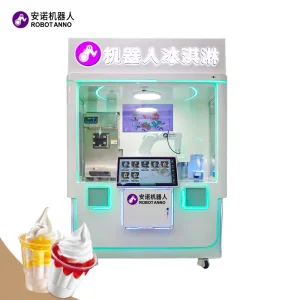
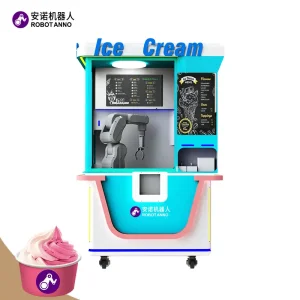
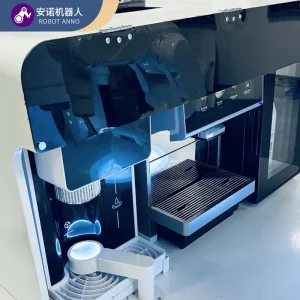
South Korea stands at the global forefront of autonomous retail adoption, driven by a unique convergence of demographic shifts, hyper-dense urbanization, structural labor changes, and advanced digital payment infrastructures. The traditional Korean commercial beverage sector—historically anchored by dense clusters of manual specialty coffee shops in Seoul, Busan, and Incheon—is undergoing a profound transformation toward 24/7 unmanned operations (무인 카페, or "Moo-in Cafes").
According to macroeconomic labor analysis in East Asia, South Korea’s statutory minimum wage increases over the past decade, combined with rising commercial property rentals and strict limits on working hours (52-hour workweek policy), have forced commercial operators, convenience store chains, and franchise owners to rethink traditional operating models. In response, automated robotic coffee kiosks and closed ice cream machines have transitioned from novelty installations to core operational assets capable of delivering predictable profit margins, 100% operational repeatability, and continuous 24/7 revenue stream generation without human intervention.
Strategic Market Insight: In the South Korean market, consumer behavioral shift towards "Untact" (contactless) culture has elevated automated beverage solutions from cost-saving measures to preferred customer experiences. The requirement for Coffee Robot Suppliers is no longer just selling machinery—it demands delivering high-throughput, sanitary, and aesthetic robotic ecosystems fully integrated into Korea’s digital payment stack (KakaoPay, NaverPay, Payco, and local credit card VAN protocols).
Korea boasts one of the highest per-capita coffee consumption rates globally (over 405 cups per adult per year). Autonomous kiosks maximize sales in micro-spaces down to 3.3 square meters.
With digital payment penetration exceeding 94% in urban Korea, integrated robotic systems remove transaction friction entirely through multi-screen interactive QR and NFC terminals.
By eliminating shift turnover, barista training costs, and absenteeism, robotic kiosks achieve payback periods ranging between 11 to 14 months under standard Korean footfall conditions.
The engineering landscape of automated beverage robotics has evolved beyond rudimentary 3-axis Cartesian gantry systems into highly sophisticated 6-axis industrial articulated robotic arms paired with proprietary computer vision, thermal stabilization, and pneumatic telemetry systems. For global enterprise buyers and Korean distributors, evaluating a Coffee Robot Factory requires analyzing the core structural components that determine long-term operational integrity and beverage quality.
Modern commercial coffee and ice cream kiosks manufactured by Industry 4.0 leaders utilize high-precision 6-axis robotic arms equipped with industrial harmonic reducers and brushless servo motors. This architecture delivers repeatability precision of ±0.02mm, enabling the robotic arm to execute complex fluid movements—such as intricate latte art pouring, dynamic ice cream swirling with precise pitch angles, and delicate cup placement under high-pressure dispensers.
To meet the exacting taste standards of Korean coffee consumers, our automated coffee robots feature commercial-grade dual-boiler extraction engines, rotary vane pumps delivering stable 9-bar pressure, and real-time electronic PID temperature regulation accurate to ±0.5°C. Grinding units incorporate 64mm commercial titanium flat burrs integrated with optical bean monitoring and automatic grind-size adjustment based on ambient humidity telemetry.
In the frozen dessert segment, hygiene compliance is paramount. The Closed Ice Cream Machine design isolates the pasteurization chamber, liquid milk reservoir, and freezing cylinders within a sealed, food-grade stainless steel environment. Integrated CIP (Clean-in-Place) automated washing cycles utilize ozone-sterilized water and thermal cycles to sanitize product contact lines automatically during off-peak hours, fully adhering to international NSF and South Korean KFDA hygiene standards.
| System Architecture Feature | Legacy Push-Button Vending | 3-Axis Cartesian Kiosk Systems | Next-Gen 6-Axis AI Robotic Kiosk (RobotAnno) |
|---|---|---|---|
| Motion Control & Flex | Fixed mechanical chutes | Linear X-Y-Z gantry motion | Full 6-DOF articulated robotic arm |
| Extraction Quality | Instant powder / Soluble syrup | Basic espresso boiler (Unregulated) | Dual-boiler 9-Bar PID espresso + Bean grind monitoring |
| Visual Interaction & Art | None (Hidden dispensing) | Basic linear movement | Dynamic latte art + Animated motion interaction |
| Sanitization & Food Safety | Manual periodic cleaning required | Semi-automated flush | Fully automated sealed CIP pasteurization & UV light sterilizer |
| Korean Payment Integration | Standard coin/cash reader | Basic credit card terminal | Native API: KakaoPay, NaverPay, VAN, Apple Pay, Kiosk UI |
| IoT Telemetry & AI Diagnosis | None / Local error lights | Basic telemetry via 3G | Real-time Cloud Dashboard, predictive maintenance & AI bean metering |
Importing and deploying commercial robotics into South Korea requires strict adherence to national electrical, safety, food health, and radio frequency regulations. A reliable OEM factory supplier must provide turnkey hardware and software adaptation specifically engineered for the Korean market environment.
Our coffee robots and enclosed ice cream machines undergo rigorous electromagnetic compatibility (EMC) testing and safety verification to earn the KC Mark. This ensures seamless grid connectivity (220V/60Hz optimized for South Korea) and absolute electrical safety in high-footfall public venues.
Every fluid line, silicone tube, stainless steel boiler, and dispensing nozzle that contacts water, coffee, or liquid dairy is certified under Ministry of Food and Drug Safety (KFDA) guidelines, ensuring zero toxic leaching and corrosion resistance under continuous thermal stress.
A major bottleneck for overseas hardware importers in Korea is payment software incompatibility. Our Industry 4.0 factory solutions incorporate a modular Android/Linux IPC core that seamlessly bridges foreign hardware with Korean payment middleware. The system supports direct integration with:
As a specialized manufacturer headquartered in Shenzhen—the world's hub for advanced hardware innovation—RobotAnno bridges cutting-edge robotics R&D with unmatched industrial manufacturing scale. For Korean operators and global distributors, sourcing directly from an established OEM/ODM factory yields decisive competitive advantages in unit economics, customization speed, and quality control.
From sheet metal fabrication and CNC robotic arm assembly to SMT circuit board manufacturing and software firmware engineering, 100% of critical manufacturing steps occur in-house under ISO9001 quality management systems.
Every commercial robotic unit undergoes 72 hours of uninterrupted stress testing—simulating thousands of espresso extraction cycles, ice cream dispensing runs, and robotic trajectory verification before export packaging.
We provide full white-label hardware customization for Korean franchise brands, including custom exterior vinyl wraps, LED accent lighting, modular flavor expansions, and custom UI software branding.
Deploying coffee robots and automated ice cream systems across Korean prime real estate—such as KTX transit hubs, Incheon Airport terminals, Seoul shopping malls (Starfield, Lotte World Mall), corporate campuses (Pangyo Techno Valley), and 24/7 unmanned store networks—requires tailored operational strategies. Below is a macro analysis of deployment formats and financial payback modeling.
Footprint: 2.5m² - 4.0m²
Target Locations: Subway corridors, hospital lobbies, university libraries.
Key Benefit: Ultra-low rent exposure with maximum throughput capability (up to 120 cups/hour).
Footprint: 6.0m² - 10.0m²
Target Locations: Shopping centers, amusement parks, highway service areas.
Key Benefit: Combines 6-axis Coffee Robot + Closed Ice Cream Machine to maximize average order value (AOV).
Footprint: Modular container unit
Target Locations: Festivals, outdoor parks, pop-up events in Gangnam & Hongdae.
Key Benefit: High mobility; easily relocated based on seasonal footfall traffic.
Comparative financial analysis highlights why top-tier Korean operators are transitioning from human-staffed coffee outlets to automated robotic kiosks:
| Operational Metric (Monthly Est. KRW / USD) | Traditional Manual Cafe (2 Baristas) | RobotAnno Autonomous Kiosk | Monthly Net Savings |
|---|---|---|---|
| Labor Expenses (Wages + Insurance) | ₩5,500,000 (~$4,200) | ₩0 (Unmanned) | + ₩5,500,000 |
| Real Estate Rental (Required Sq Meters) | ₩4,000,000 (35m² store) | ₩1,200,000 (4m² kiosk) | + ₩2,800,000 |
| Raw Ingredients Waste & Spoilage | 8% - 12% (Human error) | < 1% (Precision dosing) | + ₩600,000 |
| IoT Cloud & Routine Maintenance OPEX | ₩0 | ₩350,000 (~$260) | - ₩350,000 |
| Total Estimated Operational Cost | ₩9,500,000 / month | ₩1,550,000 / month | SAVINGS: ₩7,950,000 / mo |
Explore our full range of CE, FCC, and ISO9001 certified robotic kiosks engineered for global commercial deployment.
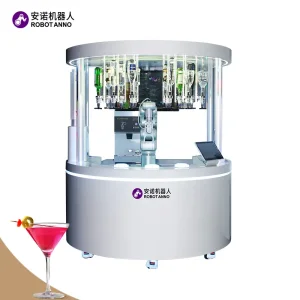
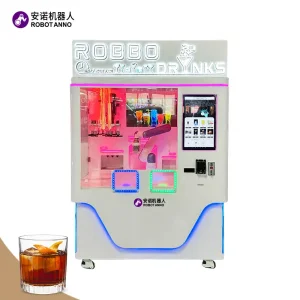
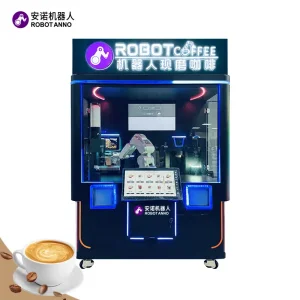
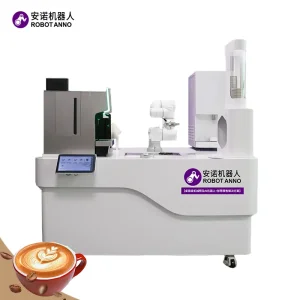
Expert insights addressing key technical, compliance, operational, and procurement queries regarding coffee and ice cream robotics.
A: To legally import and operate commercial robotic kiosks in South Korea, systems must hold KC (Korea Certification) Electrical Safety and EMC Certification. Additionally, all food-contact components (boilers, pumps, syrup lines, ice cream dispensing nozzles) must comply with KFDA (Ministry of Food and Drug Safety) standards. Our factory provides full assistance with KC certification documentation, KFDA material safety test reports, and factory auditing support for Korean importers.
A: Our kiosks feature an open IPC architecture that bridges directly with leading South Korean Payment Gateway (PG) and Value Added Network (VAN) providers (such as KICC, KSNET, and NICE Payments). The capacitive touch GUI supports native QR scanning for KakaoPay, NaverPay, Toss, and ZeroPay, alongside IC chip and contactless NFC credit card processing.
A: The Closed Ice Cream Machine features a hermetically sealed refrigeration system and automated CIP (Clean-In-Place) capabilities. It executes programmable high-temperature pasteurization cycles and automated water flushes during low-traffic off-peak hours. This drastically reduces manual daily disassembly while strictly maintaining KFDA bacterial limit compliance.
A: The industrial 6-axis articulated robotic arm has a Mean Time Between Failures (MTBF) rating exceeding 30,000 operational hours (approximately 5 to 7 years of continuous high-volume commercial service). We provide a 1-year standard hardware warranty, lifelong IoT cloud management software updates, and express spare parts dispatch to major Korean ports within 3 to 5 business days.
A: Yes, 100% of the UI/UX—including touchscreen ordering menus, voice prompts, error messages, and customer receipts—is fully localized in Korean. Overseas clients can customize menu items, pricing structures, brand logos, and promotional video carousels directly via our web-based IoT Cloud Management Portal.
A: Standard manufacturing lead time for customized units is 15 to 20 business days. Sea freight shipping from our Shenzhen/Guangzhou logistical hubs to Incheon or Busan Port typically takes only 3 to 5 days. We offer complete FOB, CIF, or DDP (Delivered Duty Paid) shipping arrangements, handling export customs clearance smoothly.
Partner with an established Industry 4.0 Coffee & Beverage Robot Manufacturer. Get factory-direct pricing, KC compliance support, and turnkey OEM/ODM customization.
Send Inquiry Now