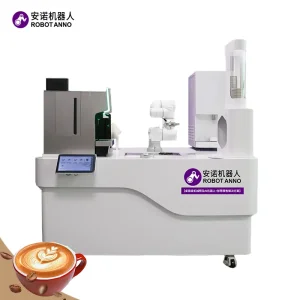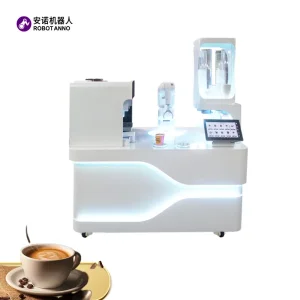
Engineered for continuous 24/7 commercial operation, extreme ambient resilience, and seamless localized payment integration.
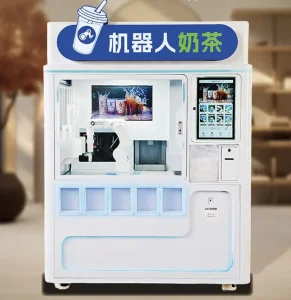
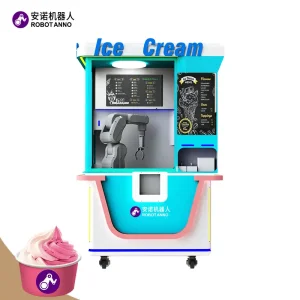
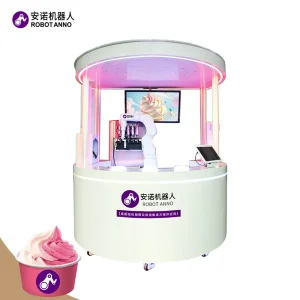
Analyzing the convergence of youth demographics, urban beverage expansion, and automated commercial infrastructure across major Pakistani metropolitan centers.
Pakistan represents one of the most dynamic, high-growth consumer frontiers in South Asia. With over 60% of its 240+ million population under the age of 30, the shift toward quick-service beverage consumption, automated retail, and experiential food-service technology is accelerating at an unprecedented pace. Traditional food and beverage models are increasingly challenged by skyrocketing urban commercial real estate leases, surging overhead expenses, and shortages of skilled culinary labor. In response, enterprise operators in tier-1 hubs such as Karachi, Lahore, Islamabad, Rawalpindi, and Faisalabad are aggressively turning to OEM Hot Products Manufacturers & Factories to procure automated robotic kiosks, commercial Bubble Tea Machines, and AI-driven barista workstations.
Key Market Insight: The rapid expansion of modern shopping complexes—such as Dolmen Malls in Karachi, Emporium & Packages Malls in Lahore, and Centaurus Mall in Islamabad—has created an urgent demand for zero-labor, foot-traffic-dense retail formats that operate continuously without quality variance.
The OEM beverage machinery sector in Pakistan is transitioning from simple manual dispense equipment to fully integrated robotic automation systems. This whitepaper establishes an authoritative framework for enterprise buyers, commercial franchise groups, and industrial distributors seeking to evaluate global manufacturing capabilities, technical compliance, localized power adaptation (220V/50Hz grid isolation), and long-term return on investment (ROI).
Addressing thermal management, electrical grid volatility, and specialized payment gateway integrations unique to Pakistan's retail infrastructure.
Pakistani commercial environments experience frequent voltage fluctuations and load-shedding events. OEM factories engineering for Pakistan incorporate heavy-duty industrial UPS bypass channels, wide-input voltage regulators (180V-260V), and low-draw standby modes to ensure uninterrupted operation during power transitions.
Seamless automated sales require direct API integration with domestic Pakistani financial channels. Hardware protocols support dual QR and NFC payment readers compatible with JazzCash, Easypaisa, HBL Pay, and international credit networks (Visa/Mastercard) alongside 4G telemetry modules.
With summer temperatures exceeding 45°C in regions like Sindh and Punjab, ambient heat resilience is critical. Commercial beverage robots utilize dual-compressor R290/R404a cooling loops, reinforced thermal insulation, and active condenser dust filtering to maintain strict food-safety storage temperatures (+2°C to +4°C).
In high-density commercial strips such as MM Alam Road (Lahore), DHA Phase 5 & 6 (Karachi), and F-6/F-7 Sector Markets (Islamabad), the cost of leasing a traditional 1,200 sq.ft retail store often consumes up to 35% of monthly gross revenue. OEM automated kiosks reduce the required operational footprint down to just 2.5 to 4.0 square meters. By eliminating front-of-house service staff and minimizing utility footprint, franchise operators can achieve payback periods in under 8 months while delivering identical beverage metrics across multiple locations.
Deconstructing the mechanics, automated recipe dosing, and sanitation engineering driving the Pearl Milk Tea boom across Pakistan.
The adoption of Taiwanese and Chinese-originated Boba culture in Pakistan has shifted from a niche trend to a dominant mainstream beverage category. However, preparing authentic pearl milk tea manually involves complex, labor-intensive steps: precise tapioca pearl cooking, tea leaf extraction at exact thermal points, liquid sugar dosing, ice blending, and hermetic cup sealing. Manual preparation frequently leads to inconsistent taste profiles, slow throughput during peak hours, and heightened risk of ingredient spoilage.
| Sub-System Component | Technical Specification | Commercial Benefit for Pakistan Operators |
|---|---|---|
| Multi-Topping Peristaltic Dosing | 4-8 Channel Stepper Motors (+/- 0.5g accuracy) | Prevents ingredient waste; ensures exact sweetness & tapioca pearl ratios across every single cup. |
| Thermal Induction Cup Sealer | Automated High-Speed Ultrasonic/Thermal Sealing | Guarantees 100% spill-proof delivery for takeaway orders and local delivery apps (Foodpanda). |
| Automated Clean-in-Place (CIP) | 80°C High-Pressure Water Jet Rinsing System | Ensures compliance with Punjab Food Authority (PFA) and Sindh Food Authority (SFA) hygiene codes. |
| Dual Temperature Reservoirs | Isolated Hot (85°C) & Refrigerated (4°C) Holding Tanks | Allows instantaneous switching between hot winter chai-boba infusions and ice-cold summer fruit teas. |
Custom OEM manufacturing solutions enable Pakistani franchise brands to customize the physical kiosk aesthetics, localized touchscreen software interfaces (offering both English and Urdu language toggles), and specialized ingredient container capacities to match local consumer preferences, such as higher milk-fat ratios and regional flavor infusions like cardamom and mango boba.
Evaluating OEM/ODM manufacturing frameworks, structural engineering standards, and supply chain logistics for high-volume deployments.
OEM factories utilize industrial 6-DOF (Degrees of Freedom) robotic arms featuring heavy payload tolerances, IP65 waterproof joints, and brushless servo motors capable of over 50,000 continuous hours of maintenance-free beverage crafting.
All internal tubing, mixing chambers, and robotic grippers strictly utilize SUS304/316 surgical stainless steel and NSF-certified food-grade silicone, preventing corrosion and ensuring zero chemical leaching in high-humidity zones.
Kiosks are designed for seamless containerized shipping via sea freight into Karachi Port (KPT / QICT). Modular assembly allows on-site deployment and commissioning within under 4 hours from unboxing.
Looking to white-label or customize robotic beverage hardware for your local distribution network in Pakistan?
Send Inquiry Now to Engineering TeamNext-generation advances in computer vision, edge AI telemetry, and autonomous inventory replenishment.
The future of commercial beverage manufacturing lies at the intersection of machine learning, predictive robotics, and hyper-personalized customer interaction. As global OEM factories refine their technical roadmaps, several groundbreaking innovations are being integrated into upcoming machine iterations destined for the Pakistani market:
Ensuring complete alignment with Pakistani statutory food standards, electrical certifications, and localized warranty networks.
Deploying complex automated food and beverage machinery into Pakistan requires strict adherence to international manufacturing certifications as well as national and provincial regulatory frameworks. Reputable OEM factories provide full compliance verification to safeguard buyer capital:
All internal fluid pathways, food-grade lubricants, cleaning agents, and automated washing cycles are certified 100% Halal-compliant, eliminating cross-contamination risks.
Factory production lines maintain ISO9001 quality management alongside European Union CE marking and US FCC electromagnetic compatibility certification.
Hardware components, wiring harnesses, and high-voltage isolation circuits comply with Pakistan Standards and Quality Control Authority guidelines.
Explore our full range of factory-supplied unmanned kiosks, coffee robots, and custom beverage dispensers available for import into Pakistan.
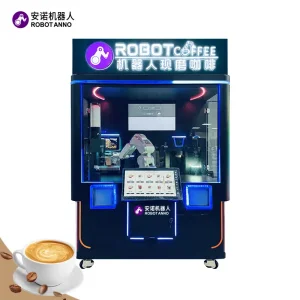
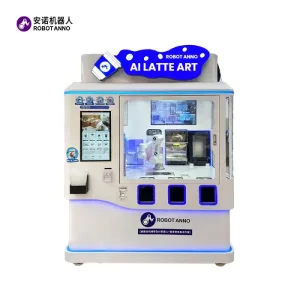
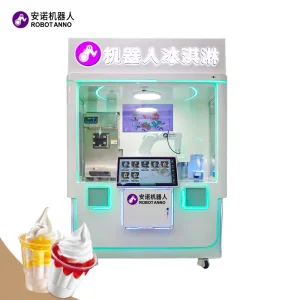
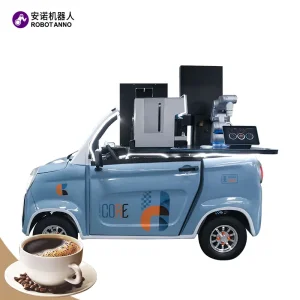
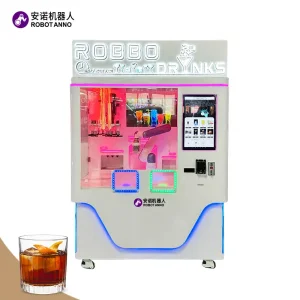
Direct answers to critical B2B procurement, technical, and operational questions for enterprise buyers in Pakistan.
Our commercial OEM Bubble Tea Machines feature active temperature-controlled ingredient hoppers. Liquid sugars and syrups are maintained at constant viscosity levels using peristaltic dosing pumps with +/- 0.5g precision. Tapioca pearls are preserved in a micro-heated vacuum reservoir that prevents clump aggregation while maintaining optimal chewy texture ("QQ texture") for up to 12 hours without degradation.
Each unit exported to Pakistan is equipped with an integrated industrial isolation transformer, automated surge protection device (SPD), and wide-range voltage stabilizer capable of handling fluctuations between 180V and 260V AC at 50Hz. In cases of sudden power loss, an internal UPS battery backup safely completes the active beverage cycle, stores telemetry data, and shuts down the robotic arm smoothly.
Yes. The 21.5-inch interactive HD touchscreen UI fully supports multi-lingual switching, including English, Urdu, and Arabic. Payment terminal hardware integrates directly via MDB standard protocol or web API to process QR payments through JazzCash, Easypaisa, HBL Pay, and international bank cards seamlessly.
Based on deployment data across tier-1 Pakistani malls (e.g., Karachi, Lahore, Islamabad), an unmanned robot kiosk serving 120-180 cups daily yields a typical payback period of 6 to 9 months. Cost savings stem primarily from an 85% reduction in labor overhead, zero beverage wastage due to exact recipe dosing, and 24/7 operation without break shifts.
As a direct factory manufacturer, we provide end-to-end customization including custom exterior sheet metal powder coating, vinyl brand wrapping, LED sign illuminated branding, custom robotic movements, custom cup size grippers (12oz to 24oz), and proprietary cloud dashboard integrations.
Contact our senior engineering and export sales specialists today to receive full technical specifications, factory-direct OEM pricing, and shipping schedules for Pakistan.
Send Inquiry Now