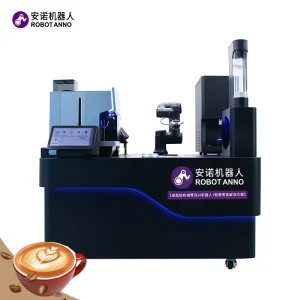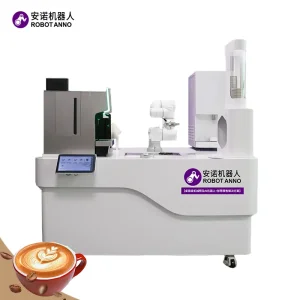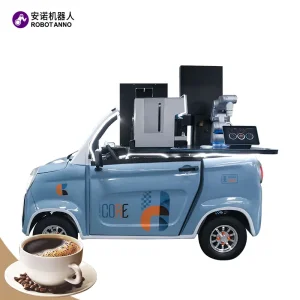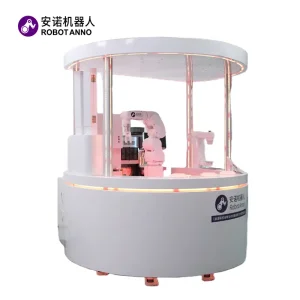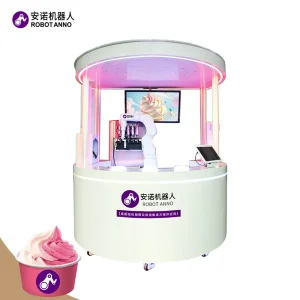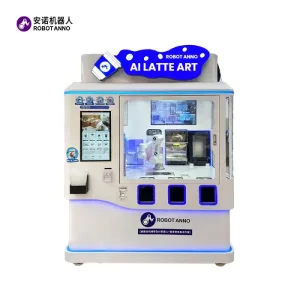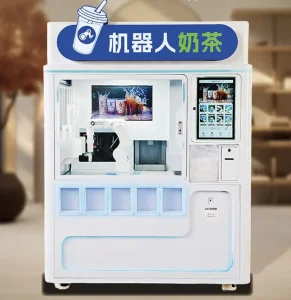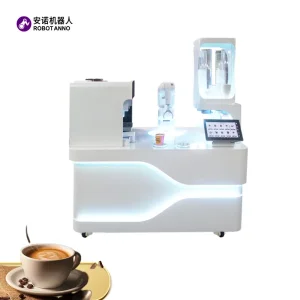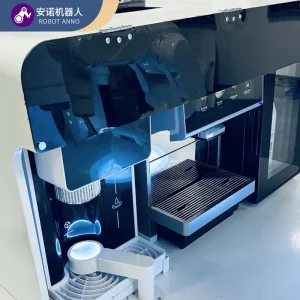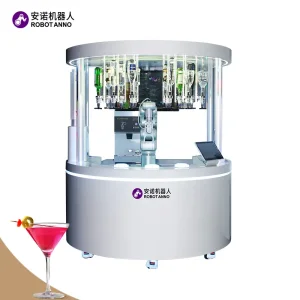
The global commercial beverage industry is undergoing a structural transition from legacy manual espresso machines and enclosed black-box vending units toward Open Coffee Machine Architectures powered by 6-axis robotic arms, AI computer vision, and cloud IoT telemetry.
Unlike traditional enclosed vending kiosks, an Open Coffee Machine features a transparent or semi-open physical enclosure where high-precision robotic arms grind, tamp, extract, steam milk, and execute intricate latte art in full view of consumers. This design combines theater-style customer engagement with surgical repeatability.
Global labor shortages, rising hourly wages, and strict hygiene demands have made human-only café operations challenging to scale. Open robotic coffee bars cut operational labor expenditures by 70% to 85%, while extending service hours to 24 hours a day, 7 days a week with zero human error.
This B2B guide compiles empirical field data, supply chain metrics from leading Chinese manufacturing hubs, hydraulic engineering standards, and enterprise procurement frameworks designed specifically for global B2B buyers, distributors, and commercial operators.
Why international B2B buyers and commercial brands systematically source open robotic coffee systems from Chinese OEM/ODM hubs like Shenzhen, Dongguan, and Suzhou.
China hosts an unmatched hardware-computing ecosystem. From industrial 6-axis harmonic reducers, brushless DC motors, and high-pressure Italian water pumps to food-grade 316 stainless boilers and edge computing board assemblies, every sub-assembly is sourced within a 50km radius.
Leveraging high-volume production lines and standardized robotic arm casting methods, Chinese manufacturers deliver open robotic coffee bars at 30% to 50% lower CAPEX compared to Western counterparts, without sacrificing industrial reliability.
Chinese factories excel at flexible production runs. Whether an enterprise buyer requires custom chassis branding, specialized payment gateway hardware (NAYAX, Pax, cash, QR code), or multi-beverage expansion (boba, ice cream, mixology), lead times are reduced by up to 60%.
Leading manufacturers like RobotAnno maintain ISO9001 quality management systems and export-grade certifications including EU CE, US FCC, and RoHS, guaranteeing seamless customs clearance and electrical safety globally.
Key technological shifts driving the commercial adoption of automated open-style coffee machines over the next decade.
Modern open machines utilize 3D camera sensors and edge-AI chips to monitor extraction foam thickness, liquid viscosity, and micro-foam texture. AI vision closed-loop algorithms adjust grinder fineness in real-time based on ambient humidity and bean roast profiles.
Enterprise operators manage entire fleets from a central dashboard. Remote IoT systems track bean levels, milk temperature logs, cleaning cycles, and component wear, issuing predictive maintenance alerts prior to mechanical downtime.
The boundary between coffee machines, boba dispensers, and cocktail mixers is dissolving. Open robotic arms are increasingly configured to serve fresh espresso in the morning, boba tea in the afternoon, and mixed drinks at night.
Where open robotic coffee machines deliver maximum yield, consumer engagement, and rapid capital recovery.
| Venue Scenario | Core Operational Challenge Solved | Consumer Behavior Driver | Avg. Daily Volume (Cups) | Estimated ROI Period |
|---|---|---|---|---|
| High-End Shopping Malls | Eliminates high retail store footprint costs & bar staff turnover | Visual robotic theater; interactive screen ordering; premium latte art | 250 – 450 cups/day | 5 – 7 Months |
| International Transit Hubs (Airports/Train) | 24/7 labor availability during late-night shift hours | Speed of fulfillment (<60s per cup); consistent international coffee taste | 400 – 800 cups/day | 4 – 6 Months |
| Corporate Headquarters & Tech Parks | High recurring subsidy cost of corporate cafeteria baristas | Free employee perk card integration; rapid peak morning throughput | 200 – 400 cups/day | 7 – 9 Months |
| Hospitality & Hotel Lobbies | Inconsistent night service; lack of dedicated barista talent | Touchless order flow; luxury premium aesthetics fitting modern lobbies | 120 – 250 cups/day | 8 – 11 Months |
| Theme Parks & Tourist Attractions | Severe seasonal labor demand spikes | High social media shareability; multi-language UI support | 350 – 700 cups/day | 5 – 8 Months |
An inside look at the hardware engineering and software stack required for zero-downtime open coffee machine operation.
Touchscreen / QR code / Credit Card API telemetry
Precision micron grinder + 20kg calibrated tamping pressure
9-Bar dual boiler extraction + PID temp stability
Steamed micro-foam + robotic arm pattern pouring
Automated high-temp CIP hydro-flush routine
One of the primary concerns of commercial food operators is sanitation. Premium open coffee machine manufacturers solve this via integrated Clean-in-Place (CIP) systems. Milk steam wands undergo an immediate 95°C hot water flush and steam blast after every beverage service, while internal milk lines feature automated refrigerated circulation keeping liquid dairy below 4°C at all times.
Operating an open robotic arm in public environments requires zero compromise on consumer safety. Modern machines are engineered with optical light curtains, ultrasonic proximity sensors, and torque-limiting joint feedback motors. If a hand enters the robotic movement envelope during operation, movement halts instantly in under 15 milliseconds.
A practical evaluation framework for procurement heads, concessionaires, and master franchisees evaluating Open Coffee Machine suppliers.
Direct technical and operational answers to common buyer queries surrounding Open Coffee Machines.
An Open Coffee Machine utilizes a semi-enclosed or open-counter layout where the robotic arm and coffee brewing mechanisms are fully visible to customers. This creates an immersive experience ("coffee theater") and makes manual cleaning/refilling easier. Closed coffee kiosks enclose all machinery inside a fully sealed vending box, which is optimized for harsh outdoor environments, whereas open machines are preferred for indoor venues like malls, airports, corporate offices, and showrooms.
Open coffee machines incorporate an onboard thermo-electric or compressor-based milk refrigerator maintaining fresh milk at 2°C–4°C. The steam wand features dual-wall thermal insulation and undergoes an automatic Clean-in-Place (CIP) high-pressure steam and hot water pulse after every single cup. Additionally, operators set daily automated chemical cleaning routines via the touchscreen interface.
Yes. Leading Chinese manufacturers like RobotAnno supply open coffee machines pre-fitted with MDB protocol hardware adapters. This allows seamless integration with credit card readers (NAYAX, Pax, Ingenico), Apple Pay, Google Pay, QR code payment gateways (WeChat Pay, Alipay), and employee RFID smart cards.
Daily physical labor requires roughly 15 to 20 minutes. Tasks include replenishing fresh coffee beans, refilling milk containers, dumping the espresso puck waste bin, and wiping down external glass counter surfaces. All internal fluid flushing and robotic calibration are automated via software.
Standard production lead time for sample units is typically 15 to 25 calendar days. For custom OEM orders (custom vinyl wraps, localized screen software, custom cup sizes, integrated ice machines), lead times range from 30 to 45 days. Machines ship fully assembled in reinforced export plywood crates.